Apple Books, Kobo, Google Play — and Kindle via Send to Kindle
7 hours 46 minutes, with chapter markers. Read by a synthetic voice, not a human narrator.
- ✓ Choose your format — EPUB or PDF
- ✓ Instant download after purchase
- ✓ Yours to keep — no subscription
A True and Faithful Account of the Religion and Manners of the Muslims
1704 · 199 pages
A True and Faithful Account of the Religion and Manners of the Muslims
Originally published as A True and Faithful Account of the Religion and Manners of the Mohammetans (1704)
by Joseph Pitts
Why our edition. In the free scan at least 1 word in 32 is garbled, and 1 in 11 carries the old long ſ (“myſelf”, “circumſtance”) — faithful to the original printing, and hard going now. Ours corrects the damage and sets the text in modern spelling. The full text is public domain and free — linked below.
On this page: our clean edition as a PDF or EPUB.
Joseph Pitts, a teenage sailor from Exeter, was captured by an Algerian corsair in 1678 and sold into slavery in Algiers, where under beatings he outwardly converted to Islam — a guilt he carried throughout this narrative. His master took him on the Hajj to Mecca and Medina, making him the first known Englishman to perform the pilgrimage; his eyewitness account was unprecedented for English readers. He eventually escaped and returned home, writing both an exact description of Muslim worship and a deeply personal record of faith lost and reclaimed. First published 1704.
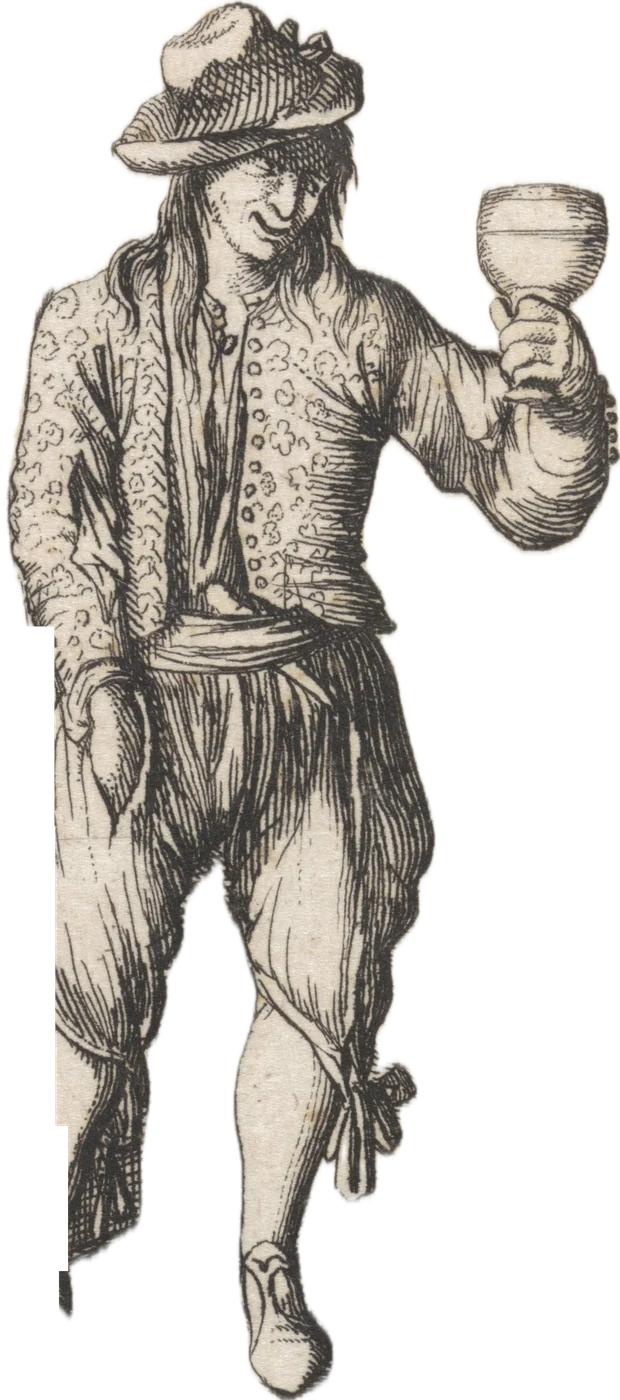
The changed life
Pressed under torture into renouncing Christ, Pitts wrestled for years with a faith he believed he had betrayed — and his book is the testimony of a conscience that found its way back.
Is there an audiobook of A True and Faithful Account of the Religion and Manners of the Muslims?
Yes. The complete audiobook of A True and Faithful Account of the Religion and Manners of the Muslims by Joseph Pitts runs 7 hours 46 minutes, with chapter markers, and is $10.99. It is an unabridged reading of the same edition sold here, delivered as an M4B you download and keep — there is no subscription and no app.
The narration is synthetic: it is read by a text-to-speech voice, not by a human narrator. We say so here, on the buy button and on the receipt, because it is the kind of thing a listener should know before paying rather than after.
Which edition of A True and Faithful Account of the Religion and Manners of the Muslims is this?
Our edition follows the fourth edition, printed at London in 1810 as an appendix to Henry Maundrell's Journey from Aleppo to Jerusalem — the setting that carries Pitts's own revisions and the cleanest of the four surviving printings; doubtful readings were checked against the third edition of 1731. The free scan linked here is that whole volume, with Pitts's book as its appendix. Spelling and dated terminology are modernized, his transliterations are given in the forms a reader can look up, and six editorial notes answer the places where he says what something means rather than what he saw — in the words of Muslim converts whose own accounts this series carries. Every change is set out below.
Joseph Pitts published this account at Exeter in 1704, after fifteen years' slavery in Algiers and a forced conversion to Islam. He was the first Englishman known to have made the pilgrimage to Mecca, and he wrote the book to tell his countrymen what he had actually seen.
The text here follows the fourth edition, printed at London in 1810 as an appendix to Henry Maundrell's Journey from Aleppo to Jerusalem, which carries Pitts's own revisions and is the cleanest surviving setting of the book. Doubtful readings were checked against the third edition of 1731.
What we changed, and why.
The spelling and punctuation are modernized, and so are words that have simply gone out of English: thence, thither, ere, hath. Where Pitts wrote a word that has since turned into a false friend — his "Boors" for country people — it is given in its plain modern sense.
Dated terms for Muslims and for Islam are updated to the words those communities use for themselves. Mahometan and Mussulman become Muslim; Mahometanism becomes Islam; Alcoran becomes Quran.
Pitts also transliterated by ear, having no dictionary and no standard to follow, and those words are given in the forms a reader can now look up: abdes is wudu, nomas is namaz, erkaets are rak'ahs, towoaf is tawaf, hagge is hajji, emaum is imam, beat Allah is Bayt Allah. His ear was often good and always honest, but an edition exists to communicate, and his spellings now stand between the reader and what he is describing. The four schools of Sunni law, which he calls hanifee, schafee, hanbelee and malekee, are given as Hanafi, Shafi'i, Hanbali and Maliki; the caliphs he lists as Abu-beker, Omar and Othman are Abu Bakr, Umar and Uthman.
Two words are deliberately left as he wrote them. Pitts says Turk to mean both Ottoman and Muslim, and "turned Turk" is his own phrase for what was done to him; replacing it would erase the fact rather than clarify it. He says Papist, Popery and Romish about Roman Catholics, and means the insult. Changing that would be editing his opinion rather than his spelling.
The key to the engraved plan of the Temple at Mecca has been left out. We do not reproduce the plate, and its lettered legend survives only as unreadable scanning; the four schools it named are described in Pitts's own prose in Chapter VII.
Six editorial notes have been added, marked in the text and set apart from anything Pitts wrote. Each one attaches to a place where he says what something means rather than what he saw, and answers it in the words of a man who held the belief before he left it — Imad-ud-din Lahiz, a Quran scholar of Punjab, and Kamil Abdul Messiah of Beirut, whose own accounts are published in this series. Where none of them speaks to the point, we have said nothing.
The scan this text was made from carries at least one damaged word in every sixty-seven. Every repair is recorded.
The 1704 text is in the public domain. This edition is copyright T.S. Baker Books, 2026.
A note on the text. A True and Faithful Account of the Religion and Manners of the Muslims is in the public domain. What you’re buying is our edition: the careful typesetting and correction. The original text is also available free here.
That free scan runs about 8.6 errors per 1,000 characters (OCR mistakes, stray marks, broken words), and carries the old long ſ on roughly 17 words per 1,000 — “myſelf”, “circumſtance” — which is faithful to the original printing and hard going now. Our edition corrects the errors and sets the text in modern spelling.
Related reading
On the same shelf
Kamil Abdul Messiah
Henry H. Jessup · 1898
Also listed in Famous Muslim Converts to Christianity.
On the same shelf
An Authentic Narrative
John Newton · 1764
Also listed in Old Christian Books Worth Reading.
More like this
We publish first-person accounts of changed lives, and translate works into English that have never been in it. Pick what you want to hear about — nothing is pre-selected, and every email carries a one-click unsubscribe.