Apple Books, Kobo, Google Play — and Kindle via Send to Kindle
- ✓ Choose your format — EPUB or PDF
- ✓ Instant download after purchase
- ✓ Yours to keep — no subscription
Observations on the History and Evidences of the Resurrection of Jesus Christ
1747 · 283 pages
Observations on the History and Evidences of the Resurrection of Jesus Christ
by Gilbert West
Why our edition. In the free scan at least 1 word in 82 is garbled. Ours corrects the damage. The full text is public domain and free — linked below.
On this page: a summary of Observations on the History and Evidences of the Resurrection of Jesus Christ, and our clean edition as a PDF or EPUB.
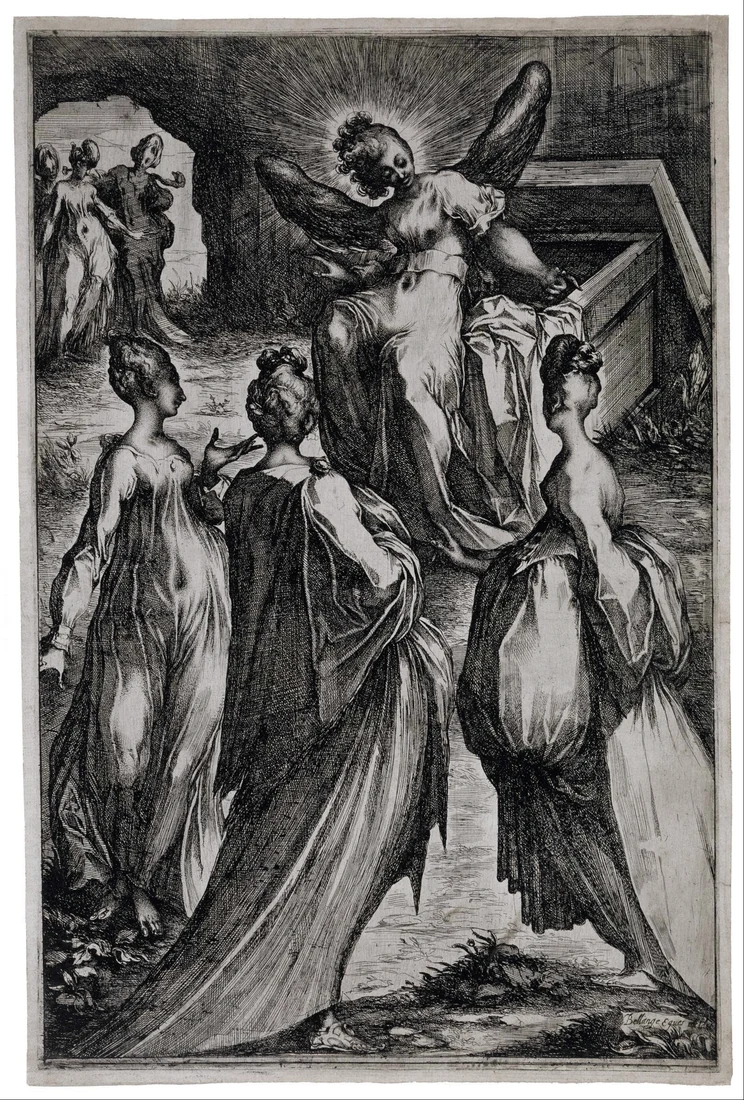
Gilbert West, a poet who had flirted with the deism of his generation, works through the four resurrection accounts section by section — the women at the sepulchre, the appearances, the apparent discrepancies between Matthew and Mark — and concludes that the narratives are reconcilable and the event attested. It is the eighteenth-century original of the investigative form Frank Morison used in 1930.
The convert behind the argument
West was a poet and translator of Pindar who, like his cousin and friend Lyttelton, had taken up the fashionable deism of his generation. Samuel Johnson records that the two ‘had for a while listened to the blandishments of infidelity’ and that the book’s first buyers did not know of West’s ‘change of opinion.’ Lyttelton’s companion essay is a letter to West, written to him as a fellow believer, and it praises his book on the resurrection.
Summary
West proceeds section by section rather than thematically, which is what makes the book feel modern. He works through the appearance to Mary Magdalene, the report of the women, the testimony of Matthew and Mark compared, the points at which they are thought to disagree, the interview on the road to Emmaus, and the state of mind of the disciples after the crucifixion.
His governing claim is that the apparent contradictions among the accounts are the ordinary artifacts of independent testimony about a crowded morning, and that a harmonized sequence can be constructed which does violence to none of them. He treats the disciples’ despair before the event and their conduct after it as the central evidential fact to be explained.
Published in the same year as Lyttelton’s essay on St. Paul, and usually read with it, the book was reprinted throughout the nineteenth century. Its method — examine the narratives as a lawyer or historian would examine any contested testimony — is the one Frank Morison arrived at independently in 1930; Morison’s book never mentions West, which makes the resemblance the more striking.
Who was Gilbert West?
Gilbert West (1703–1756) was an English poet and translator, educated at Eton and Oxford, best known before this book for his translations of Pindar. He held a clerkship of the Privy Council and was, with his friend George Lyttelton, part of the circle around Frederick, Prince of Wales.
He entertained deist doubts as a young man. Oxford gave him an honorary doctorate for this book, and Samuel Johnson included him in the Lives of the Poets, where his ‘change of opinion’ is recorded.
Which edition of Observations on the History and Evidences of the Resurrection of Jesus Christ is this?
The 1834 Boston edition, which includes a brief memoir of the author, is free at Archive.org; an earlier 1749 printing is also available. Our edition is a corrected typesetting of the text.
This edition follows the Boston reprint of Gilbert West’s Observations on the History and Evidences of the Resurrection of Jesus Christ, published by James Loring in 1834. The treatise was first printed at London in 1747.
The 1834 setting was chosen deliberately, and not because it was nearest to hand. Archive.org holds nine printings of this book, and eight of them are eighteenth-century settings using the long s — the letter that a scanner reads as an f. That produces a class of error no dictionary can find, because the wrong reading is usually a real word: “fins” for sins, “fo” for so, “fame” for same. A page full of it scores clean on every check we have and says things West did not write. The 1834 reprint has no long s at all, and runs at about a fifth of the scanning damage of the alternatives. It also carries Samuel Johnson’s short memoir of the author.
We checked it for cuts before using it. A nineteenth-century American reprint of an apologetic work is often an abridgement, and where we found one — the American Tract Society’s Jenyns, which says on its own front page that “a few passages, not essential to the argument, have been omitted” — we set it aside rather than publish another publisher’s judgment about what an author should not have said. This printing announces nothing of the kind. The four places in it that speak of an “abridgment” are West’s own prose about the Gospel narratives.
What has been repaired is damage done by the scanner, not by the author. Running heads, page numbers and catchwords have been removed; words broken at the line ending have been rejoined; letters the scanner confused have been restored where the book’s own vocabulary settles the question. West’s spelling, punctuation and wording stand as the 1834 printing has them, including his capitalisation of the sacred names and his eighteenth-century habit of quoting Scripture inside his own sentences.
His thirty sections are numbered as the book numbers them. The first is set as an arabic 1 in the scan and as a roman I everywhere else in the book; we have made it consistent.
Prepared by T.S. Baker Books, 2026.
What the free copy says, and what the book says
Quoted from Archive.org’s free text of this book — the text its EPUB and full-text downloads are made from.
Free copy
as ye walk, and are sad 1 And
Our edition
as ye walk, and are sad? And
Luke 24, the road to Emmaus: the question mark read as a 1.
Free copy
and have crucified him. Hut we trusted that it had been he which should have redeemed Israel
Our edition
and have crucified him. But we trusted that it had been he which should have redeemed Israel
Free copy
the evangelists, J will be bold to say, stand as clear of that charge
Our edition
the evangelists, I will be bold to say, stand as clear of that charge
Common questions
- What is Gilbert West’s Observations on the Resurrection?
- A section-by-section examination of the four resurrection accounts, arguing that their apparent discrepancies are what independent testimony normally looks like and that a consistent sequence of events can be reconstructed from them.
- Why are West and Lyttelton always mentioned together?
- They were cousins and friends, both former deists, and their two defenses of Christianity were published in the same year, 1747. Lyttelton’s is written as a letter to West and praises his book on the resurrection, and the two were often bound and sold together afterwards.
A note on the text. Observations on the History and Evidences of the Resurrection of Jesus Christ is in the public domain. What you’re buying is our edition: the careful typesetting and correction. The original text is also available free here.
That free scan runs about 2.0 errors per 1,000 characters (OCR mistakes, stray marks, broken words). Our edition corrects them.
Related reading
The letter addressed to West
Observations on the Conversion of St. Paul
George Lyttelton · 1747
Lord Lyttelton’s case from the conversion of St. Paul, written to West and published the same year, by a man who had once doubted it.
The same experiment, 1930
Who Moved the Stone?
Frank Morison · 1930
Frank Morison did this again in the twentieth century, arguing with the skeptical scholarship of his own day rather than West’s. Neither book cites the other.
The same reversal, in a scientific age
The Examination and the Return
George John Romanes · 1895
Darwin’s protégé argued theism out of existence in print, then spent his last years working his way back. West, a former deist, made the case for the resurrection; Romanes worked his way back to theism itself.
More like this
We publish first-person accounts of changed lives, and translate works into English that have never been in it. Pick what you want to hear about — nothing is pre-selected, and every email carries a one-click unsubscribe.
Related collection